Origins Of The Swine Flu Virus
Researchers use evolutionary history to trace the early days of the pandemic
Closely related forms of the H1N1 strain of influenza virus circulated undetected in swine for years, a study published online June 11 in Nature reports. The virus, which has spread to multiple continents, has now been classified by the World Health Organization as a pandemic.
“Based on this report, we had a virus circulating in pigs for 10 years and nobody knew anything about it because we were not doing proper surveillance,” says Daniel Perez, an influenza expert at the University of Maryland in College Park.
Researchers traced the sordid past of the H1N1 virus by comparing mutations among different strains of the virus. Genetic sequences of 15 swine influenzas from Hong Kong and two human H1N1 viruses were compared with 796 sequences representing a large spectrum of related strains from humans, birds and pigs.
Analyzing numbers of mutations allowed an international team of researchers to estimate how long ago the strains first existed. Virus strains more than 90 percent identical to the current H1N1 strain were circulating in pigs between 9.2 and 17.2 years ago, the researchers found. The current strain “evidently spread without anyone noticing it for 10 years,” says Michael Worobey, an evolutionary biologist at the University of Arizona in Tucson and one of the study’s authors. “We need to spend more energy looking at what’s in pigs.”
The molecular clock method the team used assumes that genomes mutate at relatively constant rates, a tricky assumption for sporadically mutating influenza strains.
“Any estimate like this has a certain amount of uncertainty to it,” Worobey says. Although the numbers are not exact, he says, the data clearly show that a similar version of the virus was around long before anyone was aware of it.
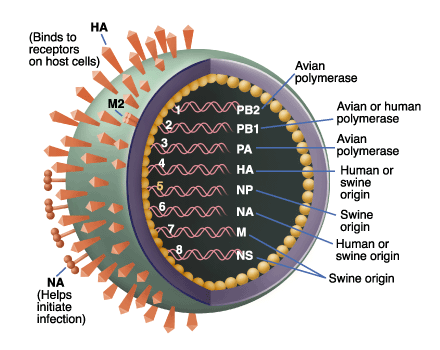
The report also shows that each bit of the current virus’s DNA had been circulating on its own and primarily in pigs for years before combining to form the virus responsible for the current pandemic. Some genes have been in pigs for decades. “Across the genome, this is something that came from pigs,” Worobey says.
Some of these DNA segments came from a North American swine influenza virus, which itself is made of bits of avian, human and swine influenzas (called a triple-reassortant strain). Other segments came from Eurasian swine with avian virus components. The combination of the triple-reassortant strain from North America and the avianlike strain from Eurasia probably happened as live pigs were transported between North America and Eurasia, the authors say.
“We can do all the surveillance we want in humans, but if we really want to prevent pandemic influenza…, a fundamental change in efforts on the animal health side has to be made,” Perez says.
On the same day the new report appeared, the World Health Organization classified the H1N1 outbreak as a pandemic, defined as showing sustained person-to-person transmission in many parts of the world.
WHO Director-General Margaret Chan said that the organization is raising the alert level after determining that flu cases are now showing up in people who didn’t bring it from another region and weren’t in contact with such travelers. “Further spread is considered inevitable,” Chan said in a news conference.
Thomas Frieden, director of the Centers for Disease Control and Prevention, said in a June 11 press briefing that the new classification does not imply that the H1N1 virus has become more virulent.
“This does not mean that there is any difference in the level of severity of the flu,” he said. Rather, the pandemic label “is important because it does send the strong message that the virus is here, it’s in all likelihood here to stay, and it’s important that we continue our aggressive efforts to prepare and respond.”
So far no decision has been made to mobilize pharmaceutical companies to start mass-producing vaccines aimed specifically at the novel H1N1 virus. But preliminary steps to make that a seamless move have already been taken.
I definitely agree that animal disease surveillance be intensified to help prevent future strains to infect humans.
Swine flu Virus
Saturday, June 13, 2009

Friday, June 12, 2009
WHO Declares Swine Flu a Pandemic
WHO Declares Swine Flu a Pandemic
The declaration means that the new flu virus is spreading quickly around the world.
The World Health Organization (WHO) has formally declared a pandemic in the growing outbreak of H1N1 influenza. This is the type widely known as "swine flu." WHO told its member nations June 11 that it is raising its pandemic warning level from phase 5 to 6. This is the highest alert level.
The declaration means that a new flu virus is spreading quickly around the world. Calling H1N1 a pandemic does not mean that WHO thinks it is severe. Most cases have been mild. As of June 10, WHO said the disease was in at least 74 countries. They had reported 27,737 cases of swine flu. These included 141 deaths.
Deciding when to call an epidemic a pandemic is a very important distinction. Once a pandemic is declared, the World Health Organization (WHO) and national health agencies set in motion some drastic and very costly programs.
In addition, it's important to make sure not to declare a pandemic before it is really under way. Otherwise, the term itself can strike unnecessary fear.
WHO now has formally declared the new H1N1 virus (swine flu) a pandemic. But that does not mean that the situation is any scarier than it was yesterday. One reason the WHO has delayed giving the infection this label is that it has caused relatively mild illness in most people. That still is true.
So what does it mean to say there's a pandemic of H1N1 virus? Let's look at definitions.
The definition of an epidemic is widely accepted. An epidemic means that a disease is occurring more often than normal. Any disease can be an epidemic, including those that are not known to be infectious.
However, there really is no agreed upon definition of a pandemic. To call a disease a pandemic, it must be occurring more often than normal in multiple continents around the world.
But that's not the only requirement. If it were, then we would call most seasonal flu a pandemic. We don't and we shouldn't.
So a pandemic must meet other criteria. It must be caused by a new agent or one that has been through substantial change.
It's debatable whether a disease that is not infectious could be called a pandemic. For example, is obesity a pandemic? I think it would be better to limit the definition only to new infectious agents that can spread easily from human to human.
Until recently, the new H1N1 virus (swine flu) has been seen almost exclusively in North America. Now, cases appear to be rising rapidly in Australia. Hundreds of other cases have been reported in Japan and Europe. Many have criticized WHO for being too slow to declare a new pandemic.
According to the WHO, pandemics can start if:
* A disease begins to occur in a population that has not been seen the disease before, or at least not recently.
* The agent that causes the disease infects humans.
* The agent is very contagious, meaning it can spread easily from human to human.
An infection can be very easy to catch from another human being, but not be dangerous. Cold viruses are one example.
The new H1N1 virus is a strain of influenza A. So far it has not shown itself to be any more dangerous than the usual flu strains. In fact, most people have much milder symptoms than in the usual flu.
There are other signs that this virus is quite different from the usual flu viruses. For example, almost always the number of cases of influenza drops dramatically after April in the Northern Hemisphere. This H1N1 strain is spreading easily as we move into the later part of spring. The influenza virus likes to hang out in cold, dry air. This strain of flu is thriving in warmer, moist air.
Now that a pandemic is declared, WHO will even more closely monitor what is happening around the world. It will try to give consistent messages to all countries. WHO does not have the power to enact policy. That will be done by the leaders of each country. Already, we have seen a wide disparity in the responses by different countries.
WHO wants to prevent widespread panic. So it strongly suggests that countries do NOT:
* Close borders
* Perform a general disinfection
* Have people who are well wear masks
* Limit travel within a nation, except as part of a global response to contain the infection to specific places
The WHO can only suggest these principles. Countries can ignore them. Some already have done so because their leaders feel it is in the best interest of their citizens.
Vaccine production will ramp up even more rapidly now. However, it appears that October is the earliest we will see delivery.
Meanwhile, keep washing your hands frequently and stay at home if you do have flu-like symptoms.
On a positive note, if you do get infected with this virus, you may become immune to similar but more dangerous strains of this H1N1 virus that may emerge in the future.
Surely, you should still try to avoid getting infected. This virus tends to cause mild symptoms, but this is not true in everybody. Most reported deaths have occurred in people with severe long-term diseases or impaired immune systems. But there is always a risk of overwhelming infection in anyone.
So it is better that everyone be prepaired to meet this growing concern about the virus.
The declaration means that the new flu virus is spreading quickly around the world.
The World Health Organization (WHO) has formally declared a pandemic in the growing outbreak of H1N1 influenza. This is the type widely known as "swine flu." WHO told its member nations June 11 that it is raising its pandemic warning level from phase 5 to 6. This is the highest alert level.
The declaration means that a new flu virus is spreading quickly around the world. Calling H1N1 a pandemic does not mean that WHO thinks it is severe. Most cases have been mild. As of June 10, WHO said the disease was in at least 74 countries. They had reported 27,737 cases of swine flu. These included 141 deaths.
Deciding when to call an epidemic a pandemic is a very important distinction. Once a pandemic is declared, the World Health Organization (WHO) and national health agencies set in motion some drastic and very costly programs.
In addition, it's important to make sure not to declare a pandemic before it is really under way. Otherwise, the term itself can strike unnecessary fear.
WHO now has formally declared the new H1N1 virus (swine flu) a pandemic. But that does not mean that the situation is any scarier than it was yesterday. One reason the WHO has delayed giving the infection this label is that it has caused relatively mild illness in most people. That still is true.
So what does it mean to say there's a pandemic of H1N1 virus? Let's look at definitions.
The definition of an epidemic is widely accepted. An epidemic means that a disease is occurring more often than normal. Any disease can be an epidemic, including those that are not known to be infectious.
However, there really is no agreed upon definition of a pandemic. To call a disease a pandemic, it must be occurring more often than normal in multiple continents around the world.
But that's not the only requirement. If it were, then we would call most seasonal flu a pandemic. We don't and we shouldn't.
So a pandemic must meet other criteria. It must be caused by a new agent or one that has been through substantial change.
It's debatable whether a disease that is not infectious could be called a pandemic. For example, is obesity a pandemic? I think it would be better to limit the definition only to new infectious agents that can spread easily from human to human.
Until recently, the new H1N1 virus (swine flu) has been seen almost exclusively in North America. Now, cases appear to be rising rapidly in Australia. Hundreds of other cases have been reported in Japan and Europe. Many have criticized WHO for being too slow to declare a new pandemic.
According to the WHO, pandemics can start if:
* A disease begins to occur in a population that has not been seen the disease before, or at least not recently.
* The agent that causes the disease infects humans.
* The agent is very contagious, meaning it can spread easily from human to human.
An infection can be very easy to catch from another human being, but not be dangerous. Cold viruses are one example.
The new H1N1 virus is a strain of influenza A. So far it has not shown itself to be any more dangerous than the usual flu strains. In fact, most people have much milder symptoms than in the usual flu.
There are other signs that this virus is quite different from the usual flu viruses. For example, almost always the number of cases of influenza drops dramatically after April in the Northern Hemisphere. This H1N1 strain is spreading easily as we move into the later part of spring. The influenza virus likes to hang out in cold, dry air. This strain of flu is thriving in warmer, moist air.
Now that a pandemic is declared, WHO will even more closely monitor what is happening around the world. It will try to give consistent messages to all countries. WHO does not have the power to enact policy. That will be done by the leaders of each country. Already, we have seen a wide disparity in the responses by different countries.
WHO wants to prevent widespread panic. So it strongly suggests that countries do NOT:
* Close borders
* Perform a general disinfection
* Have people who are well wear masks
* Limit travel within a nation, except as part of a global response to contain the infection to specific places
The WHO can only suggest these principles. Countries can ignore them. Some already have done so because their leaders feel it is in the best interest of their citizens.
Vaccine production will ramp up even more rapidly now. However, it appears that October is the earliest we will see delivery.
Meanwhile, keep washing your hands frequently and stay at home if you do have flu-like symptoms.
On a positive note, if you do get infected with this virus, you may become immune to similar but more dangerous strains of this H1N1 virus that may emerge in the future.
Surely, you should still try to avoid getting infected. This virus tends to cause mild symptoms, but this is not true in everybody. Most reported deaths have occurred in people with severe long-term diseases or impaired immune systems. But there is always a risk of overwhelming infection in anyone.
So it is better that everyone be prepaired to meet this growing concern about the virus.
Subscribe to:
Posts (Atom)

